
Unaccessible or Inaccessible: Which Word Is Correct?
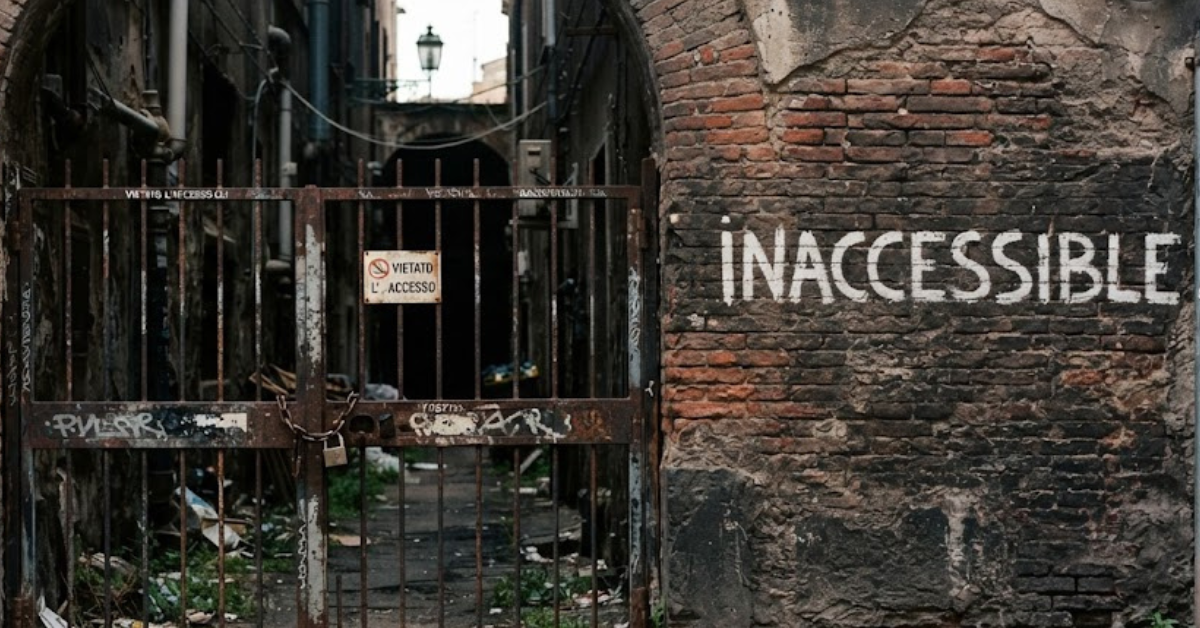
Have you ever paused while writing an email or assignment because you weren’t sure whether to use unaccessible or inaccessible? You’re not alone. This is one of those English language questions that regularly confuses writers, students, and professionals alike.
The good news is that the answer is straightforward once you understand how English forms negative adjectives. In this guide, you’ll discover which word is considered standard, why one version is preferred, when each might appear, and how to use the correct term confidently in everyday writing.
Understanding the Difference Between Unaccessible or Inaccessible
At first glance, both words seem logical. After all, English often creates opposites by adding either un- or in- to the beginning of a word.
However, there’s an important distinction.
- Inaccessible is the accepted and standard English word.
- Unaccessible exists but is considered rare, nonstandard, or obsolete in most dictionaries and style guides.
If you’re writing for school, work, publishing, or online content, inaccessible is almost always the correct choice.
What Does “Inaccessible” Mean?
The adjective inaccessible describes something that cannot be reached, entered, understood, or obtained.
Depending on the context, it can refer to physical places, digital content, information, or even people’s behavior.
Common meanings include:
- Difficult or impossible to reach
- Not available for use
- Hard to understand
- Not open to the public
- Emotionally distant or difficult to approach
Examples
- The mountain village became inaccessible after the storm.
- Several pages on the website were inaccessible due to a server error.
- The professor’s explanation felt inaccessible to first-year students.
- The actor remained inaccessible to reporters after the event.
Is “Unaccessible” a Real Word?
Technically, yes—but with an important qualification.
The word unaccessible has appeared in historical texts and older dictionaries. However, modern English overwhelmingly favors inaccessible, making unaccessible uncommon in contemporary writing.
Today, most grammar experts recommend avoiding it because readers may view it as incorrect or awkward.
In other words:
| Word | Modern Usage | Recommendation |
| Inaccessible | Standard | Use this |
| Unaccessible | Rare/Nonstandard | Usually avoid |
Why Does English Use “In-” Instead of “Un-“?
English inherited many words from Latin. Words that came into English through Latin often use prefixes such as:
- in-
- im-
- il-
- ir-
These prefixes create negative forms.
Examples include:
| Base Word | Correct Negative Form |
| accessible | inaccessible |
| possible | impossible |
| legal | illegal |
| regular | irregular |
| visible | invisible |
Meanwhile, native English words commonly take the prefix un-.
Examples include:
- happy → unhappy
- clear → unclear
- finished → unfinished
- fair → unfair
Since accessible entered English through Latin, its accepted opposite became inaccessible rather than unaccessible.
Why Do People Still Say “Unaccessible”?
There are several reasons people naturally create this version.
1. Pattern Recognition
English speakers learn that many opposites simply add un-.
For example:
- kind → unkind
- expected → unexpected
- known → unknown
So it’s understandable that someone might assume:
- accessible → unaccessible
Unfortunately, English doesn’t always follow perfectly consistent rules.
2. Limited Exposure
Many people hear the word spoken but rarely see it written, making it easier to guess the spelling.
3. Regional or Informal Usage
Some speakers occasionally use unaccessible in conversation. While listeners usually understand the meaning, it remains uncommon in edited writing.
Contexts Where “Inaccessible” Is Commonly Used
Physical Locations
The word often describes places that are difficult or impossible to reach.
Examples:
- inaccessible roads
- inaccessible islands
- inaccessible caves
- inaccessible mountain trails
Technology
In computing, the term frequently appears in error messages or technical documentation.
Examples include:
- inaccessible files
- inaccessible folders
- inaccessible databases
- inaccessible servers
For instance:
The requested document is inaccessible because the server is offline.
Accessibility and Inclusive Design
Accessibility has become an important topic in web design, education, and public services.
A website may be described as inaccessible if it cannot be used easily by people with disabilities.
Examples include:
- missing image descriptions
- poor keyboard navigation
- unreadable text contrast
- videos without captions
Making digital content accessible benefits everyone.
Education
Educational materials can be inaccessible when they’re written far above the reader’s knowledge level.
Example:
The textbook’s language was so technical that it became inaccessible to beginners.
Personal Relationships
The word can also describe people.
Example:
Despite his popularity, he remained emotionally inaccessible.
Here, the meaning shifts from physical distance to emotional availability.
Common Examples in Everyday English
You’ll often encounter inaccessible in situations like these:
- The road became inaccessible after flooding.
- Important records were inaccessible because of a software problem.
- The museum’s upper floor was inaccessible during renovations.
- Medical care remains inaccessible in some remote communities.
- The language used in the report was inaccessible to general readers.
These examples demonstrate how flexible the word is across different contexts.
Common Mistakes to Avoid
Many writers accidentally choose the wrong form.
Here are some examples.
Incorrect
- The building is unaccessible.
- These documents are unaccessible.
- The website became unaccessible yesterday.
Correct
- The building is inaccessible.
- These documents are inaccessible.
- The website became inaccessible yesterday.
Simply replacing unaccessible with inaccessible will improve the accuracy of your writing.
Simple Trick to Remember the Correct Word
A useful memory tip is to think of other familiar words.
Ask yourself:
- impossible
- invisible
- irregular
- illegal
Notice they all begin with in-, im-, ir-, or il-.
Since accessible belongs to the same family of Latin-derived adjectives, its opposite is inaccessible.
Similar Words That Cause Confusion
English contains many pairs that confuse writers because they appear equally logical.
Here are a few examples:
| Incorrect or Less Common | Standard Form |
| unpossible | impossible |
| unregular | irregular |
| unlegal | illegal |
| unresponsible | irresponsible |
| unaccessible | inaccessible |
Recognizing these patterns makes it easier to choose the correct word.
Practical Tips for Better Writing
If you’re editing your work, keep these guidelines in mind:
- Choose inaccessible in formal and informal writing.
- Avoid using unaccessible unless you’re quoting historical material.
- Use spell check, but don’t rely on it entirely.
- Read your writing aloud to spot awkward wording.
- Consult a modern dictionary if you’re unsure about uncommon word forms.
These habits improve both clarity and professionalism.
When Accuracy Matters Most
Using the correct word is especially important in:
- Academic papers
- Business emails
- Website content
- Technical documentation
- Government reports
- Job applications
- Professional publications
A small vocabulary mistake rarely changes the meaning, but correct usage helps establish credibility.
Key Takeaways
- Inaccessible is the accepted standard English word.
- Unaccessible exists historically but is rarely used today.
- The preferred form follows Latin word-formation patterns.
- The word can describe physical places, digital content, information, or people.
- Using the standard form makes your writing clearer and more professional.
Frequently Asked Questions
Is unaccessible grammatically correct?
The word has existed historically, but it is considered nonstandard in modern English. Most dictionaries and editors recommend using inaccessible instead.
Why is inaccessible preferred over unaccessible?
The adjective accessible comes from Latin, where negative forms typically use the prefix in- rather than un-. As a result, inaccessible became the accepted standard.
Can I use unaccessible in formal writing?
It’s best not to. Readers, teachers, editors, and employers generally expect inaccessible, which is recognized as the standard form.
Does inaccessible only refer to places?
No. It can describe physical locations, websites, files, information, services, ideas, and even people’s personalities or emotions.
Is inaccessible commonly used in technology?
Yes. It’s widely used to describe unavailable files, websites, servers, databases, applications, and digital resources that users cannot access.
How can I remember the correct word?
Think of similar words like impossible, invisible, and illegal. These Latin-derived words also use prefixes such as in-, im-, il-, or ir-, making inaccessible the natural choice.
Conclusion
Choosing between unaccessible or inaccessible is easier once you understand the history behind the words. While both forms have appeared in English, inaccessible is the accepted spelling used in modern dictionaries, professional writing, education, and everyday communication.
Whenever you want to describe something that cannot be reached, understood, or accessed, stick with inaccessible. It’s clear, widely recognized, and appropriate in virtually every context. Building awareness of patterns like this not only strengthens your vocabulary but also makes your writing more polished and trustworthy. Continue exploring these subtle language differences, and you’ll communicate with greater confidence and precision.