
Striping vs Stripping: What’s the Difference?
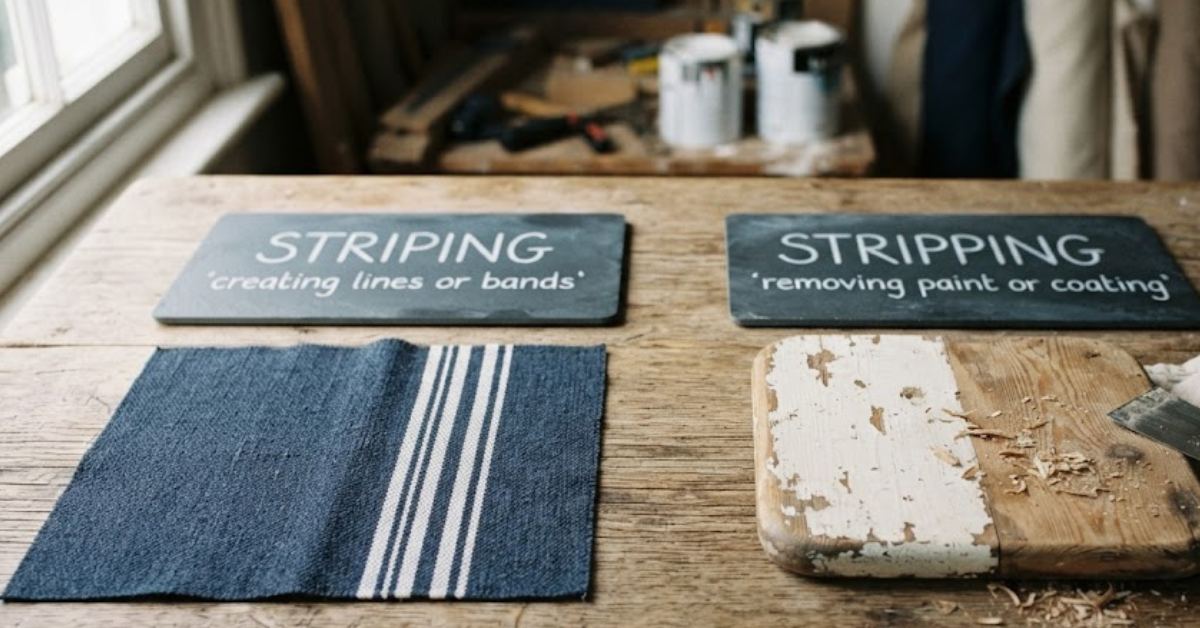
At first glance, striping and stripping look almost identical. They differ by just one letter, yet they have completely different meanings depending on the context. This small spelling difference often causes confusion in industries like construction, painting, manufacturing, and even everyday conversation, which is why so many people search for striping vs stripping.
Understanding when to use each word can help you communicate more clearly and avoid costly misunderstandings. In this guide, we’ll compare stripping vs striping, explain the meaning of each term, explore striping meaning in construction, and provide practical examples to help you choose the right word every time.
Striping vs Stripping: The Quick Answer
Although the words sound similar, they describe different actions.
- Striping means applying or creating stripes, lines, or markings.
- Stripping means removing, taking away, or peeling off something.
Here’s a simple comparison:
| Word | Meaning | Common Uses |
| Striping | Creating stripes or painted lines | Roads, parking lots, sports fields, warehouses |
| Stripping | Removing material or coverings | Paint removal, flooring, insulation, construction, manufacturing |
Remember:
- If you’re adding lines, it’s striping.
- If you’re removing something, it’s stripping.
What Is Striping?
Striping is the process of creating visible stripes, bands, or painted lines on a surface.
The term is commonly used in:
- Road marking
- Parking lot layouts
- Sports field preparation
- Warehouse safety markings
- Decorative painting
- Manufacturing
For example:
“The contractor completed the parking lot striping after the asphalt cured.”
Here, striping refers to painting parking spaces and directional lines.
Striping Meaning in Construction
One of the most common searches is striping meaning in construction.
In the construction industry, striping generally refers to applying painted markings that guide traffic, organize spaces, or improve safety.
Common construction striping projects include:
- Parking stalls
- Handicap parking spaces
- Crosswalks
- Fire lanes
- Warehouse aisles
- Directional arrows
- Loading zones
Professional striping improves both safety and compliance with local building regulations.
High-quality striping also enhances the appearance of commercial properties and makes navigation easier for drivers and pedestrians.
What Is Stripping?
Stripping refers to removing something from a surface or structure.
Depending on the industry, it may involve removing:
- Paint
- Wallpaper
- Flooring
- Electrical insulation
- Roofing materials
- Formwork
- Protective coatings
Unlike striping, stripping is a removal process rather than an application process.
Common Uses of Stripping
The word appears in many professions and industries.
Paint Stripping
Removing old paint before repainting.
Example:
“The crew spent two days stripping the old paint from the doors.”
Floor Stripping
Removing wax or protective finishes before applying new coatings.
Example:
“The maintenance team stripped the tile floor before polishing it.”
Wire Stripping
Removing insulation from electrical wires.
Example:
“Always use a wire stripper to avoid damaging the conductor.”
Construction Stripping
Removing temporary concrete forms after the concrete has gained enough strength.
Example:
“Form stripping began three days after the concrete pour.”
Stripping vs Striping: Side-by-Side Comparison
| Feature | Striping | Stripping |
| Main Action | Adding lines or markings | Removing material |
| Purpose | Organization, guidance, decoration | Preparation, repair, replacement |
| Construction Example | Parking lot lines | Removing concrete forms |
| Painting Example | Decorative stripes | Removing old paint |
| Typical Result | New markings | Clean or exposed surface |
Although the words look similar, their meanings are almost opposite.
Industries That Use Striping
Striping is commonly found in:
Road Construction
Lane markings improve traffic safety and guide drivers.
Parking Lots
Businesses rely on striping to organize parking spaces and maintain accessibility.
Sports Facilities
Football fields, soccer pitches, baseball diamonds, and athletic tracks all require precise striping.
Warehouses
Colored floor markings separate pedestrian walkways from forklift routes, improving workplace safety.
Decorative Design
Interior designers sometimes use decorative striping to create accent walls or custom finishes.
Industries That Use Stripping
Stripping also plays an important role across many fields.
Home Renovation
Removing wallpaper, paint, or flooring before remodeling.
Manufacturing
Removing protective coatings or temporary materials during production.
Automotive Repair
Paint stripping prepares vehicle surfaces for refinishing.
Electrical Work
Electricians strip wire insulation before making safe electrical connections.
Construction
Temporary supports, concrete forms, and damaged materials are stripped during various stages of a project.
Common Mistakes to Avoid
These examples show how easily the two words can be confused.
The contractor finished stripping the parking lot.
The contractor finished striping the parking lot.
The workers spent all day striping the old paint.
The workers spent all day stripping the old paint.
The electrician striped the wires.
The electrician stripped the wires.
We need to strip the road markings.
We need to stripe the parking lot.
Understanding the action involved usually makes the correct word obvious.
How to Remember the Difference
A simple memory trick can help.
Think About the Result
If you’re adding stripes, use striping.
If you’re taking something away, use stripping.
Another easy reminder:
- Striping = Stripes
- Stripping = Removing
Associating each word with its purpose makes choosing the correct spelling much easier.
Why the Difference Matters
Using the wrong word can cause confusion, especially in technical industries.
For example:
A contractor instructed to perform “parking lot stripping” might mistakenly think existing markings need to be removed rather than new ones applied.
In professional communication, precision saves both time and money.
Key Takeaways
- Striping means applying stripes or painted markings.
- Stripping means removing material, coatings, or coverings.
- Construction professionals use striping for parking lots, roads, and safety markings.
- Stripping is common in painting, renovation, electrical work, and construction.
- Remember: adding lines equals striping; removing materials equals stripping.
Frequently Asked Questions
What is the difference between striping vs stripping?
Striping involves adding painted lines or stripes, while stripping means removing material from a surface. The two words describe opposite types of work.
What is striping meaning in construction?
In construction, striping refers to applying pavement markings such as parking spaces, lane lines, crosswalks, and directional arrows to improve organization and safety.
Is it stripping or striping a parking lot?
The correct term is parking lot striping because workers are applying painted lines rather than removing anything.
What does stripping mean in construction?
Stripping usually refers to removing temporary structures, old materials, coatings, or concrete forms after they are no longer needed.
Can striping and stripping happen on the same project?
Yes. For example, workers may first strip old pavement markings before applying new striping as part of a parking lot renovation.
Why do people confuse striping and stripping?
The words differ by only one letter and sound similar when spoken quickly. However, they describe entirely different actions, making context essential.
Conclusion
The distinction between striping vs stripping is simple once you understand the action each word describes. Striping is all about adding painted lines, markings, or decorative stripes, while stripping involves removing materials, coatings, or temporary structures. Although the terms are often confused because of their similar spelling, using the correct one is especially important in industries such as construction, painting, maintenance, and electrical work.
The next time you’re writing a report, discussing a project, or giving work instructions, think about whether you’re adding something or removing it. That one question will help you choose the right word and communicate with confidence.