
Barbed Wire Tattoo Meaning: Everything You Need to Know Before Getting One
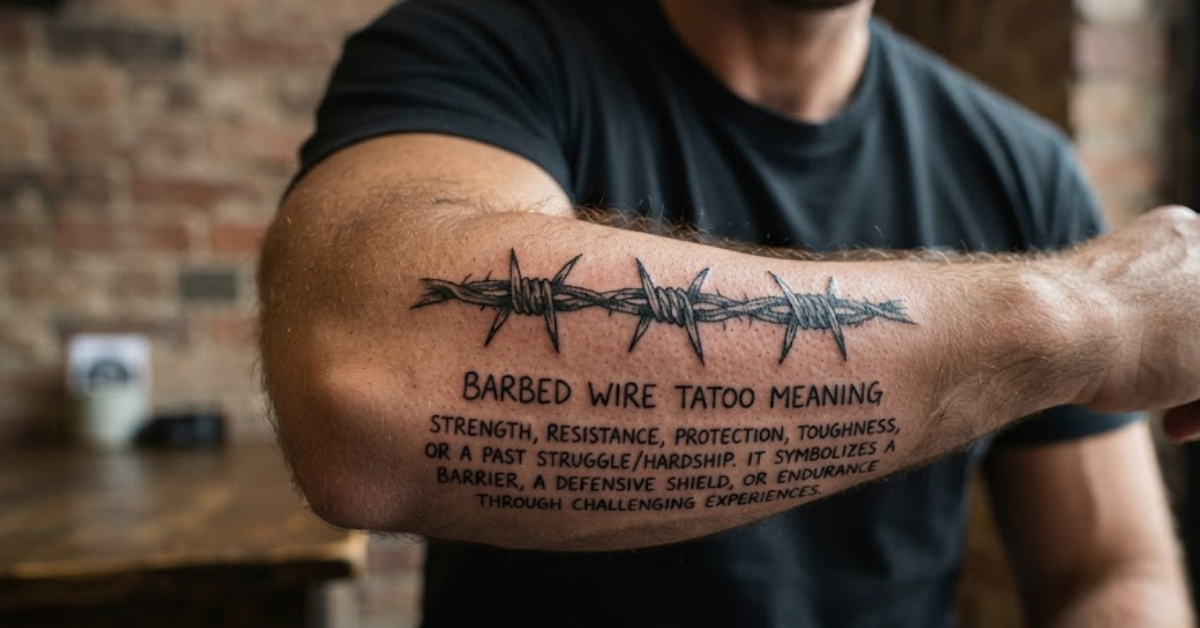
A tattoo can say a lot without speaking a single word. Some designs symbolize freedom, while others represent struggle, resilience, or personal transformation. If you’ve ever wondered about the barbed wire tattoo meaning, you’re not alone. This bold and recognizable design has a long, complex history that goes far beyond its striking appearance.
Many people ask questions like what does a barbed wire tattoo mean or whether it still carries negative associations. The answer isn’t as straightforward as you might think. Depending on the wearer, culture, and placement, the design can represent strength, sacrifice, protection, imprisonment, faith, or overcoming life’s toughest challenges.
In this guide, we’ll explore the origins of barbed wire tattoos, their symbolism, historical significance, modern interpretations, and what you should consider before choosing one.
What Is a Barbed Wire Tattoo?
A barbed wire tattoo depicts twisted strands of metal wire with sharp barbs spaced along its length. Originally designed as fencing for farms and ranches in the late 19th century, barbed wire eventually became associated with military battlefields, prisons, borders, and restricted areas.
As tattoo art evolved, this everyday object transformed into a meaningful symbol representing emotional and physical barriers.
Today, a barbwire tattoo can be customized in countless artistic styles, ranging from simple black ink bands around the arm to highly detailed designs combined with roses, crosses, skulls, birds, or flowers.
The History Behind Barbed Wire Symbolism
Understanding the history makes the tattoo’s symbolism much clearer.
Agricultural Origins
Barbed wire was invented in the 1870s to protect farmland and livestock across the American West. It quickly became a symbol of ownership, security, and protection.
For ranchers, it represented hard work and survival.
Military Associations
During World War I and World War II, barbed wire became synonymous with trenches, battlefields, and military defenses.
For many veterans, it came to symbolize:
- Sacrifice
- Survival
- Brotherhood
- Endurance under hardship
Its wartime use added emotional depth that continues to influence tattoo meanings today.
Prison Connections
Perhaps the strongest historical association comes from correctional facilities.
Barbed wire often surrounded prisons, making it a visual representation of:
- Confinement
- Punishment
- Lost freedom
- Emotional isolation
This history is one reason some people still ask whether these tattoos have criminal or prison-related meanings.
What Does a Barbed Wire Tattoo Mean?
There isn’t one universal answer.
Instead, the design carries different meanings depending on the individual wearing it.
Strength Through Hardship
Many people choose the tattoo after surviving difficult periods in life.
Examples include:
- Serious illness
- Addiction recovery
- Personal loss
- Military service
- Financial struggles
In this context, the wire symbolizes obstacles that have been overcome.
Protection and Boundaries
Just as real barbed wire protects property, the tattoo can represent emotional boundaries.
Some people use it as a reminder to:
- Protect their peace
- Guard their emotions
- Set healthy boundaries
- Avoid toxic relationships
This interpretation has become increasingly popular in recent years.
Sacrifice
Sharp wire often represents pain that led to personal growth.
The tattoo may honor:
- Military service
- Family sacrifices
- Difficult life choices
- Personal resilience
Rather than focusing on suffering alone, it often celebrates survival.
Freedom After Confinement
Ironically, many people choose the design after leaving difficult circumstances behind.
It can symbolize freedom from:
- Addiction
- Abuse
- Toxic environments
- Depression
- Limiting beliefs
Here, the wire becomes a reminder of what was left behind rather than what still exists.
Faith and Spiritual Meaning
Some Christians connect barbed wire with the crown of thorns worn by Jesus during the crucifixion.
Combined with crosses or scripture, the design may symbolize:
- Redemption
- Sacrifice
- Forgiveness
- Spiritual endurance
The meaning depends heavily on the accompanying imagery.
Barb Wire Tattoo Meaning in Different Cultures
Although widely recognized, interpretations vary around the world.
Western Countries
In North America and Europe, the design commonly represents:
- Toughness
- Independence
- Survival
- Personal struggles
It is generally viewed as an individual expression rather than belonging to one specific group.
Military Communities
Among veterans and active service members, the tattoo can honor experiences in combat or symbolize enduring difficult conditions.
It often reflects courage rather than aggression.
Prison Culture
Historically, some incarcerated individuals used barbed wire tattoos to represent years spent behind bars or time served.
However, this interpretation is far less universal today.
Many modern tattoo enthusiasts choose the design without any prison connection.
Does a Barbed Wire Tattoo Still Have Prison Associations?
This is one of the most common concerns.
The answer is yes—but only in certain contexts.
Decades ago, simple arm-band barbed wire tattoos were more strongly linked to prison culture in some countries.
Today, tattoo styles have become far more diverse.
Most modern artists and tattoo enthusiasts see the design as a symbol of resilience or personal growth rather than criminal identity.
That said, older generations or people familiar with prison symbolism may still recognize those historical associations.
Popular Barbed Wire Tattoo Designs and Their Meanings
Around the Bicep
One of the most iconic placements.
It often symbolizes:
- Strength
- Protection
- Personal discipline
Around the Wrist
Represents emotional restraint, personal boundaries, or surviving difficult experiences.
Around the Neck
A bold placement often associated with fearlessness, rebellion, or individuality.
Around the Ankle
Usually chosen for aesthetic reasons but can symbolize moving forward despite life’s obstacles.
Wrapped Around a Heart
Represents emotional pain, heartbreak, or protecting one’s feelings after betrayal.
Combined With Roses
A popular combination.
The contrast between flowers and sharp wire often symbolizes:
- Beauty and pain
- Love and sacrifice
- Hope after suffering
Combined With a Cross
Often carries spiritual significance connected to faith, perseverance, and redemption.
Celebrity Influence
The popularity of barbed wire tattoos surged during the 1990s.
Many people associate the trend with actress Pamela Anderson, whose iconic upper-arm tattoo became one of the decade’s most recognizable body art designs.
Although tattoo styles have evolved considerably since then, the design continues to inspire new interpretations among tattoo artists worldwide.
Is a Barbed Wire Tattoo Right for You?
Before choosing this design, ask yourself:
- What personal meaning does it hold?
- Do you appreciate its history?
- Are you comfortable with its older cultural associations?
- Will the symbolism still matter years from now?
The strongest tattoos usually have personal significance rather than simply following trends.
Things to Consider Before Getting One
If you’re thinking about getting this tattoo, keep these practical tips in mind:
- Research different artistic styles before choosing a design.
- Work with an experienced tattoo artist who specializes in line work.
- Think carefully about placement, as wraparound tattoos require precision.
- Consider how the design may age over time.
- Understand both its historical meanings and modern interpretations before making your decision.
Key Takeaways
- The design has multiple meanings rather than one fixed interpretation.
- Common symbolism includes resilience, protection, sacrifice, and overcoming hardship.
- Historical connections to prisons and the military still exist but are less dominant today.
- Placement and accompanying artwork often change the tattoo’s message.
- Personal meaning is more important than traditional symbolism.
Frequently Asked Questions
What does a barbed wire tattoo mean today?
Today, the design most commonly symbolizes resilience, protection, perseverance, or overcoming life’s challenges. While older interpretations still exist, many people give it deeply personal significance.
Does every barb wire tattoo meaning relate to prison?
No. Although the tattoo has historical prison associations, modern wearers often choose it to represent personal growth, survival, emotional strength, or setting healthy boundaries.
Is a barbed wire tattoo considered offensive?
Generally, no. However, because of its historical links to prisons and conflict, some people may interpret it differently depending on cultural background and context.
Why were barbed wire tattoos popular in the 1990s?
The design gained mainstream attention through celebrities, movies, and tattoo culture during the decade. It became one of the defining tattoo trends of the era.
Can women get barbed wire tattoos?
Absolutely. The symbolism is not gender-specific. Many women choose the design to represent resilience, independence, healing, or protection, often pairing it with flowers or other meaningful artwork.
What does barbed wire around the arm symbolize?
An arm-band design often represents strength, endurance, and emotional protection. For some wearers, it also serves as a reminder of hardships they have overcome.
Conclusion
The barbed wire tattoo meaning is far richer than its rugged appearance suggests. While it has historical roots in agriculture, warfare, and prison systems, its modern symbolism has evolved into something much more personal. For many people, it represents resilience, sacrifice, emotional boundaries, faith, or the strength to move forward after difficult experiences.
If you’re considering this design, take time to understand both its history and its personal significance. A meaningful tattoo isn’t just about how it looks—it’s about the story it tells for years to come. By choosing a design that reflects your own journey, you’ll wear more than ink; you’ll carry a symbol of your experiences and values.